.png)
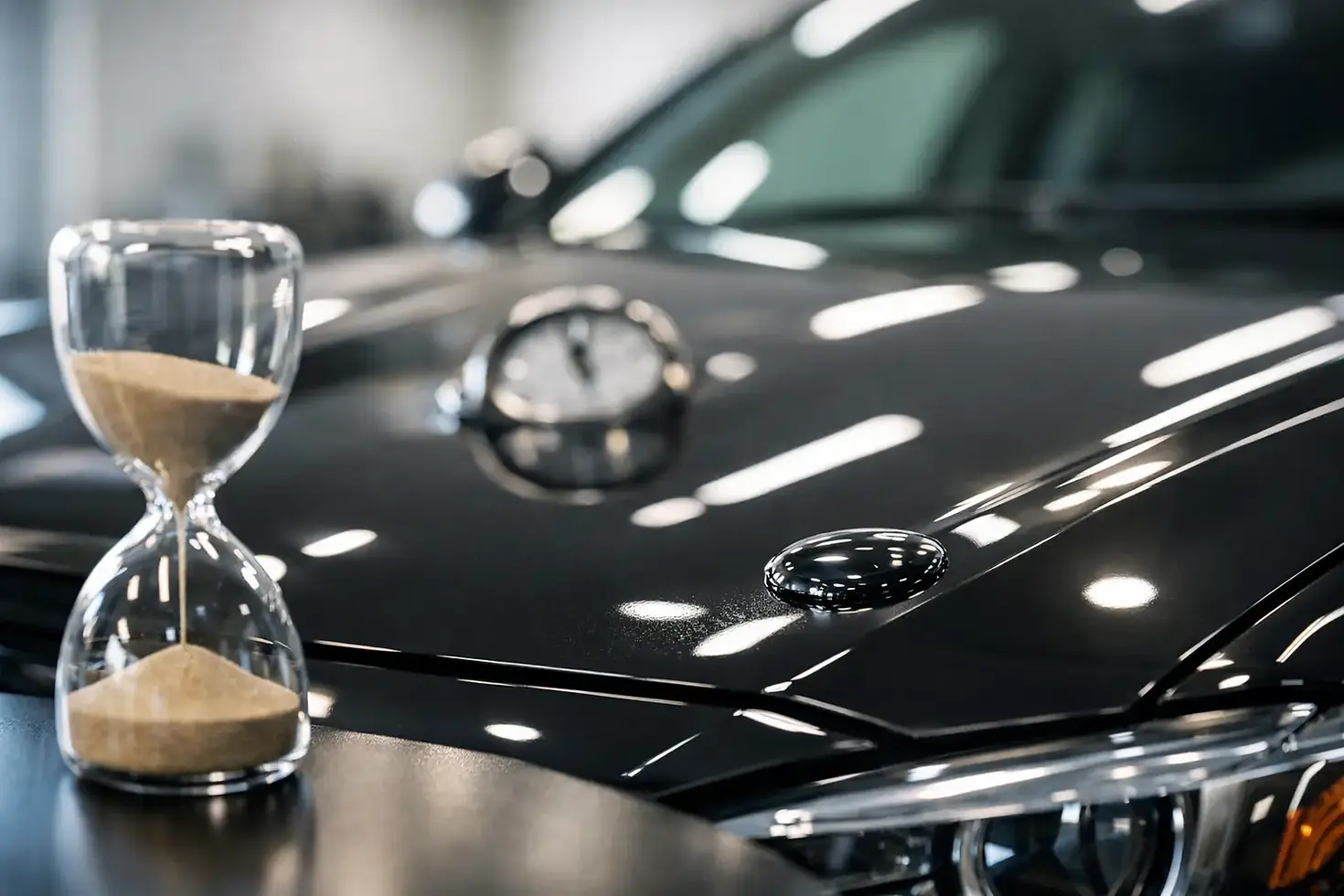
How Long Does Ceramic Coating Last?
A ceramic coating is not something most drivers buy because it sounds good on paper. They get it because they want their vehicle to stay glossier, clean up easier, and hold up better against the daily wear that comes from commuting, parking outside, road grime, and Pennsylvania weather. So the real question is simple: how long does ceramic coating last, and is it worth it?
The honest answer is that it depends on the product, the prep work, and how the vehicle is treated after the coating is installed. In real-world conditions, a professional-grade ceramic coating can last anywhere from 2 to 5 years, and some premium systems can go even longer with proper maintenance. That said, the number on the label is never the whole story. A coating only performs as well as the paint underneath it and the care it gets afterward.
How long does ceramic coating last in real life?
If you are looking for a practical expectation rather than a sales pitch, most professionally installed ceramic coatings deliver strong protection and visible performance for several years. That means you should continue to see water beading, easier washing, and a slicker, glossier finish long after a wax or sealant would have faded.
A consumer-applied ceramic spray or entry-level coating may last several months to around a year. A professionally installed coating, applied after proper paint correction and surface prep, typically lasts much longer because the bond is stronger and the product itself is more durable.
This is where many people get confused. They hear that ceramic coating lasts for years and assume the car will look perfect without effort. That is not how it works. Ceramic coating is a form of protection, not a force field. It helps resist contamination, UV exposure, and minor environmental wear, but it still needs proper washing and upkeep to keep performing at a high level.
What actually affects ceramic coating lifespan?
The biggest factor is prep work. If the paint is not fully cleaned, decontaminated, and corrected before the coating goes on, the coating may not bond the way it should. That shortens its life and limits the results from day one.
Product quality matters too. There is a big difference between a quick over-the-counter coating and a professional product installed by someone who works with paint every day. Better coatings are generally thicker, more chemically resistant, and designed to hold up longer under real driving conditions.
Then there is the vehicle itself. A garage-kept weekend car will usually get more life out of a coating than a daily driver that sits outside through sun, rain, pollen, salt, and winter mess. If you drive a lot, park outdoors, or go through automatic car washes regularly, expect the coating to wear down faster.
Maintenance is the last major piece. Ceramic coating makes washing easier, but bad washing habits can still damage the finish. Harsh chemicals, tunnel washes with abrasive brushes, and neglected buildup can reduce how long the coating performs the way it should.
Daily drivers vs. garage-kept vehicles
This is one of the clearest examples of why lifespan varies. A family SUV that sees school runs, grocery trips, road salt, and long work commutes is going to put a coating through more abuse than a second vehicle that only comes out on nice weekends.
That does not mean coating a daily driver is a bad idea. In fact, daily drivers often benefit the most because they need the extra help. It just means the realistic lifespan may be closer to the lower end of the range unless maintenance stays consistent.
Climate and local conditions matter
In South Central Pennsylvania, vehicles deal with a little bit of everything. Summer sun, spring pollen, road salt, rain, and temperature swings all take a toll on paint. Ceramic coating helps reduce that impact, but those conditions still matter when you are estimating longevity.
A car that sees winter roads in Elizabethtown, Hershey, or Lancaster will need more attention than one that lives in a milder climate year-round. That is another reason why honest shops avoid one-size-fits-all promises.
Signs your ceramic coating is still working
A lot of drivers judge a coating only by water beading. Beading is a good sign, but it is not the only one. A healthy ceramic coating also tends to keep the surface slicker, reduce how strongly dirt sticks, and make washing faster and easier.
If your vehicle still sheds water well, cleans up without much effort, and maintains a crisp gloss after washing, the coating is likely still doing its job. If the paint feels rough, stays dirty more easily, or loses that self-cleaning effect, the coating may be clogged with contamination or starting to wear down.
That is worth pointing out because not every performance drop means the coating is gone. Sometimes it just needs a proper decontamination wash or maintenance service to restore how it behaves.
What shortens the life of a ceramic coating?
The quickest way to reduce coating life is poor aftercare. Running the vehicle through brush-style automatic washes is a common problem. Those washes can introduce swirl marks and slowly wear at the surface. Cheap soaps, strong degreasers, and neglected contaminants can also chip away at performance.
Skipping regular washes hurts too. Ceramic coating makes maintenance easier, but it does not make maintenance optional. Bird droppings, bug remains, tree sap, and mineral-heavy water spots can still damage the surface if they sit too long.
There is also a difference between fading performance and total failure. A coating might lose some of its slickness or hydrophobic effect before it fully stops protecting. That is why maintenance checks matter. Catching small issues early can help preserve the coating longer.
How to make ceramic coating last longer
If you want the most out of your investment, start with professional installation. Good prep, quality products, and careful application make a real difference in both durability and appearance.
After that, maintenance is straightforward. Wash the vehicle by hand or use touchless methods when possible. Use coating-safe soaps. Dry the vehicle properly so hard water does not leave mineral deposits behind. And do not let contamination sit on the paint for days if you can avoid it.
Periodic maintenance services also help. A professional inspection and decontamination wash can remove buildup that blocks water behavior and dulls the finish. In some cases, a topper or maintenance treatment can refresh performance and extend the overall life of the coating.
This is where no-shortcuts work matters. Ceramic coating lasts longer when the original install is done right and the follow-up care is consistent. There is no magic around it. Just quality materials, proper technique, and regular upkeep.
Is ceramic coating worth it if it does not last forever?
For most drivers, yes. Not because it makes a vehicle maintenance-free, but because it makes protecting the paint much easier over time. A coated vehicle is generally simpler to wash, better at resisting grime and UV exposure, and more likely to keep that freshly detailed look between services.
It can also help preserve resale value, especially on newer or well-kept vehicles. Paint condition matters. A vehicle with better gloss, fewer contaminants bonded to the surface, and less long-term wear usually presents better when it is time to trade in or sell.
The key is having the right expectation. Ceramic coating is long-term paint protection, not permanent perfection. If you go into it expecting easier maintenance, better shine, and years of added defense, it delivers real value.
How long does ceramic coating last compared to wax?
Wax usually lasts weeks to a few months depending on the product and conditions. Paint sealants can last longer, often several months. Ceramic coatings sit in a different category because they bond more durably to the surface and stand up better to weather, washing, and contaminants.
That longer lifespan is a big reason many vehicle owners move past wax once they understand the difference. The upfront cost is higher, but so is the level of protection and the amount of time it keeps working.
If you are serious about keeping your vehicle looking sharp, ceramic coating makes the most sense when you want lasting results instead of constantly starting over. The best outcome comes from matching the coating to how you drive, where you park, and how well you plan to maintain it. Get that part right, and the finish will keep paying you back every time the sun hits the paint.